Your car has 150,000 miles. Maybe 200,000. Years of daily driving, weather exposure, and normal wear have taken their toll. But here's the good news: professional detailing can work wonders on high-mileage vehicles.
What High Mileage Does to Your Car
Exterior Effects
Paint:
- UV oxidation (chalky, faded appearance)
- Accumulated micro-scratches
- Swirl marks from years of washing
- Chemical etching from contaminants
- Stone chips and road rash
Trim and plastics:
- Faded and grayed appearance
- Brittleness from UV exposure
- White oxidation on black trim
- Cracking on exposed rubber
Glass:
- Pitting from road debris
- Water spot etching
- Wiper blade damage areas
- Haze from oxidation
Interior Effects
Fabric:
- Staining accumulation
- Wear patterns on seats
- Headliner sagging or staining
- Carpet matting and crushing
Leather:
- Cracking and surface breakdown
- Color wear on bolsters
- Dried-out, stiff texture
- Embedded body oils
Plastics/vinyl:
- Fading and color change
- Sticky texture development
- Cracking and warping
- Scratch accumulation
Restoration Possibilities
What Can Be Fixed
Excellent restoration potential:
- Oxidized paint (if clear coat intact)
- Swirl marks and light scratches
- Faded plastic trim
- Stained fabric
- Dirty leather
- Cloudy headlights
- Water spots
Limited restoration:
- Deep scratches to primer
- Significant leather cracking
- Sagging headliner
- Clear coat failure (peeling)
Needs replacement:
- Through-to-metal rust
- Heavily damaged upholstery
- Severely cracked dash
- Failed glass
Why Restore Instead of Trade In?
Many owners assume trading in a tired car is the only option. But restoration often makes more sense. Here's the math.
A 2015 SUV with 180,000 miles:
- Trade-in value (as-is): $5,000-6,000
- Private sale (as-is): $6,500-7,500
- After $800 restoration: $8,500-10,000
- Net gain from restoration: $1,000-2,500
Beyond the numbers:
- You know this car's history
- No new car payments for years
- Delayed depreciation hit on a new purchase
- Familiar repairs and maintenance costs
A well-restored high-mileage car can serve you 3-5 more years. At $400/month for a new car payment, that's $14,400-24,000 saved.
Common Restoration Mistakes
Doing it yourself without proper tools:
Home polishing without a dual-action polisher causes buffer trails. Using household cleaners damages leather. Wrong products leave greasy residue. Professional tools and products matter.
Focusing only on appearance:
Detailing without addressing mechanical issues wastes money. Fix the engine leak before spending on paint correction. Buyers notice both.
Over-correcting old paint:
Paint thickness on older cars is often reduced from previous polishes. Aggressive cutting can burn through clear coat. Always measure first.
Skipping protection:
Restoration without sealer or coating means your work fades fast. UV exposure undoes leather conditioning. Rain undoes paint polishing. Protect every surface you restore.
The High Mileage Restoration Process
Step 1: Comprehensive Assessment
Before any work, we evaluate:
- Paint thickness (determines correction ability)
- Clear coat condition
- Interior material health
- Restoration feasibility
- Realistic outcome expectations
Step 2: Deep Decontamination
High mileage cars carry years of contamination:
| Contaminant | Treatment |
|-------------|-----------|
| Brake dust embedding | Iron decontamination |
| Industrial fallout | Chemical treatment |
| Tree sap residue | Solvent treatment |
| Tar and adhesive | Tar remover |
| Mineral deposits | Clay bar |
Step 3: Paint Correction
For oxidized or scratched paint:
Light oxidation:
- Single-stage polish
- Removes surface haze
- Restores depth and gloss
Moderate damage:
- Two-stage correction
- Compound cut, then polish
- 80%+ defect removal typical
Heavy damage:
- Multi-stage correction
- May include wet sanding
- Maximum correction possible
Step 4: Trim Restoration
Faded plastics and rubber:
- Dedicated trim restorer products
- Heat gun treatment (softens and re-blackens)
- Trim ceramic coating for longevity
- Rubber conditioner for seals
Step 5: Interior Revival
Fabric restoration:
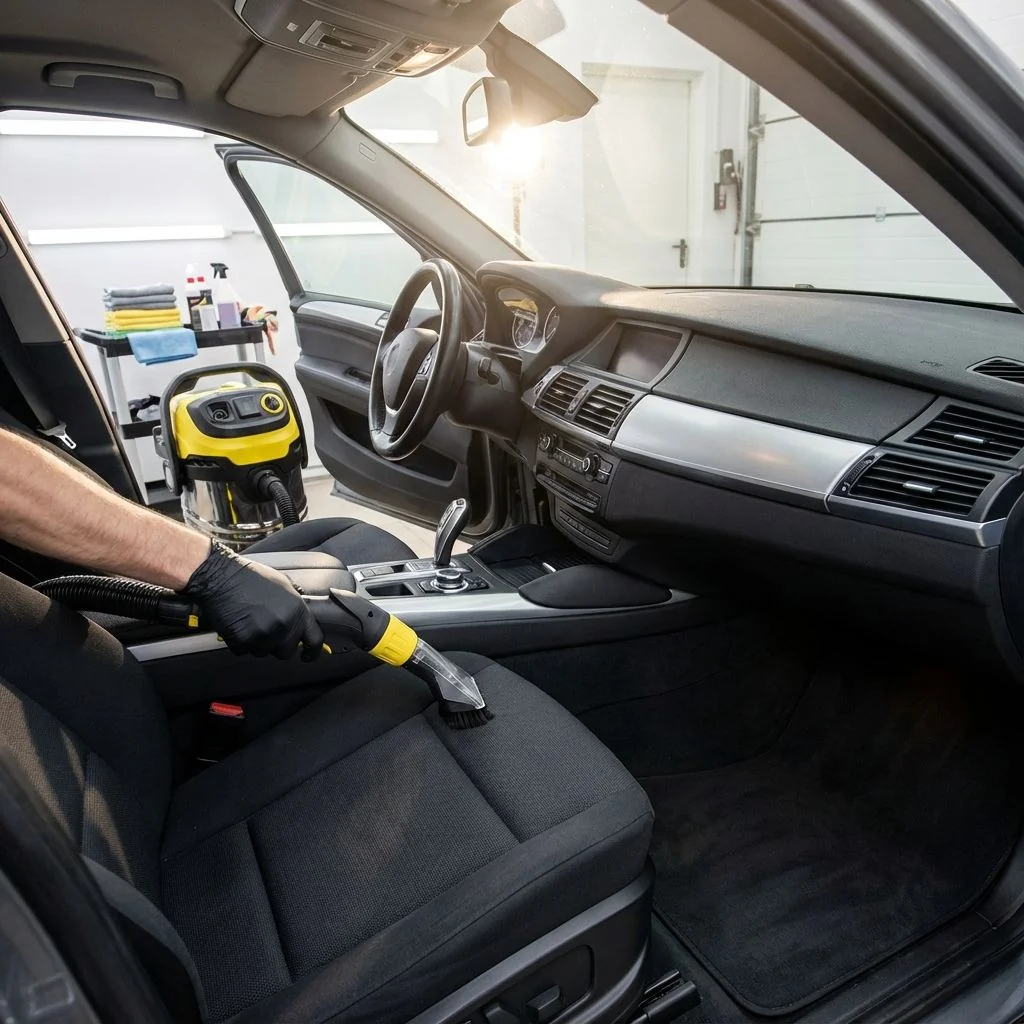
- Hot water extraction
- Enzyme treatment for stains
- Steam sanitization
- Fabric protector application
Leather restoration:
- Deep cleaning with pH-balanced cleaner
- Conditioning to restore suppleness
- Color restoration if needed
- Protective coating application
Plastic restoration:
- UV protectant application
- Scratch concealing treatment
- Texture restoration
- Ceramic coating option
Step 6: Protection Application
After restoration, protect the work:
| Surface | Protection | Longevity |
|---------|------------|-----------|
| Paint | Ceramic coating | 2-5 years |
| Trim | Trim ceramic | 1-2 years |
| Interior | Interior ceramic | 1-2 years |
| Fabric | Fabric guard | 6-12 months |
| Leather | Leather coating | 1-2 years |
Cost Expectations
High Mileage Restoration Package
| Service Level | Investment | Best For |
|---------------|------------|----------|
| Basic refresh | $300-500 | Light wear, maintenance |
| Standard restoration | $500-800 | Moderate wear, keeping car |
| Full restoration | $800-1,500 | Heavy wear, selling or keeping long-term |
| Show-quality | $1,500-3,000+ | Concours prep, collector vehicles |
Is Restoration Worth It?
Questions to Ask
Consider your situation:
- How long will you keep the car?
- What's the vehicle worth?
- What's your budget?
- Sentimental value?
- Alternative (sell/trade) cost?
ROI Calculation
Example: 2015 sedan, 180,000 miles
- Current private sale value: $7,000
- After $800 restoration: $8,500-9,000
- Net gain: $500-1,200
But also consider:
- Extended enjoyment of your vehicle
- Maintenance of usable transportation
- Delayed new car purchase costs
- Satisfaction of a well-kept car
Maintenance After Restoration
Protect Your Investment
Monthly:
- Two-bucket wash method only
- Detail spray for quick shine
- Interior wipe-down
Quarterly:
- Sealant top-up if not ceramic coated
- Interior protectant refresh
- Trim treatment touch-up
Annually:
- Professional maintenance detail
- Ceramic coating inspection
- Assess any new damage
When to Consider Alternatives
Restoration May Not Make Sense If:
- Structural rust is present
- Clear coat is failing extensively
- Interior materials are destroyed
- Vehicle has major mechanical issues
- Cost exceeds 30% of vehicle value
Better Options Then:
- Light detail only (maintenance)
- Targeted repairs only
- Trade-in for newer vehicle
- Donate to charity
Frequently Asked Questions
Can professional detailing fix oxidized paint?
Yes, if the clear coat is still intact. Paint oxidation appears as a chalky, faded surface. Professional polishing removes the oxidized layer and restores depth and gloss. Single-stage polishing handles light oxidation; heavy oxidation may need multi-stage correction. Once restored, apply ceramic coating to prevent reoccurrence.
Is paint correction safe for older vehicles?
Paint correction removes a microscopic layer of clear coat, so there are limits. Professional detailers use paint thickness gauges to ensure adequate clear coat remains. Most vehicles, even high-mileage ones, have sufficient material for one or two proper corrections. Overly thin paint may only allow polishing, not compounding.
How much does high mileage vehicle detailing cost?
Basic refresh packages run $300-$500 for light wear. Standard restoration for moderate damage costs $500-$800. Full restoration with paint correction ranges $800-$1,500. Show-quality work for collector vehicles runs $1,500-$3,000+. The investment depends on current condition and your goals.
Can cracked leather seats be repaired?
Surface cracks from dryness and UV damage can often be repaired. Professional leather repair involves sanding, filling, color matching, and sealing. Success rates exceed 85% for typical wear. Deep structural cracks or torn seams may need panel replacement. Repair costs 20-40% of replacement.
Will detailing remove water spots from glass?
Light water spots wash off normally. Etched water spots—where minerals have damaged the glass surface—require polishing with cerium oxide compound. Heavily etched glass may need replacement. Prevention is key: dry glass quickly after rain and use water repellent treatments.
How often should I detail a high mileage vehicle?
After initial restoration, maintain quarterly professional details to preserve the work. High-mileage vehicles benefit from more frequent protection since their surfaces are more vulnerable. Between details, wash properly using the two-bucket method and apply ceramic booster sprays monthly.
Can faded black trim be restored permanently?
Trim restorer products provide temporary results lasting weeks to months. Heat gun treatment softens and re-blackens plastic more durably. For permanent results, apply ceramic trim coating after restoration—protection lasts 1-2 years. Without protection, UV exposure will fade trim again within months.
Is restoring a high mileage car worth it for resale?
Typically yes. An $800 restoration on a 180,000-mile sedan can add $1,200-$2,000 to private sale value. Clean presentation dramatically impacts buyer perception and negotiating position. For trade-ins, the return is lower but vehicles in better condition receive better offers.
Give Your High Mileage Car New Life
We specialize in bringing tired vehicles back to life:
- Honest assessment of what's possible
- Tiered pricing to fit budgets
- Focus on value and longevity
- No pressure to oversell
Learn more: Professional Detailing Services — expert care for your vehicle.
📞 Schedule restoration assessment
📍 Visit our Gilroy shop — let's see what's possible.
Visit the Experts in Gilroy
Blackout Window Tinting is the Bay Area's premier choice for premium auto protection. Based in Gilroy at 610 Holloway Rd (behind Target), we've served the South County and Silicon Valley area for over 33 years. Whether you're coming from Morgan Hill, Hollister, or anywhere else in the Bay Area, we're your trusted local source for professional window tint, PPF, and ceramic coating.
📞 Questions? Call us at 408-848-8468 or get a free quote online.