Allergies don't stay home when you get in your car. In fact, your vehicle can be an allergen hotspot—enclosed space, fabric surfaces, and infrequent deep cleaning create perfect conditions for triggers to accumulate.
Common Car Allergens
What's Lurking in Your Vehicle
Dust mites:
- Live in fabric seats and carpets
- Thrive in humidity
- Feces are the actual allergen
- Survive for months
Pollen:
- Enters through ventilation
- Settles on all surfaces
- Seasonal peaks vary by location
- Recirculates with HVAC
Mold and mildew:
- Grows in damp areas
- Under floor mats
- AC evaporator coils
- Trunk carpeting
Pet dander:
- From any animal passengers
- Clings to everything
- Extremely lightweight (airborne easily)
- Persistent after pet leaves
Dust:
- Skin cells (yours and passengers)
- Fabric fibers breaking down
- Outside particles entering
- General accumulation
Symptoms of Car Allergen Exposure
You might have car allergen problems if you experience:
- Sneezing within minutes of entering car
- Runny or stuffy nose while driving
- Itchy, watery eyes
- Coughing or throat irritation
- Worsening asthma symptoms
- Headaches on longer drives
- Symptoms improve after exiting vehicle
Professional Allergen Removal Process
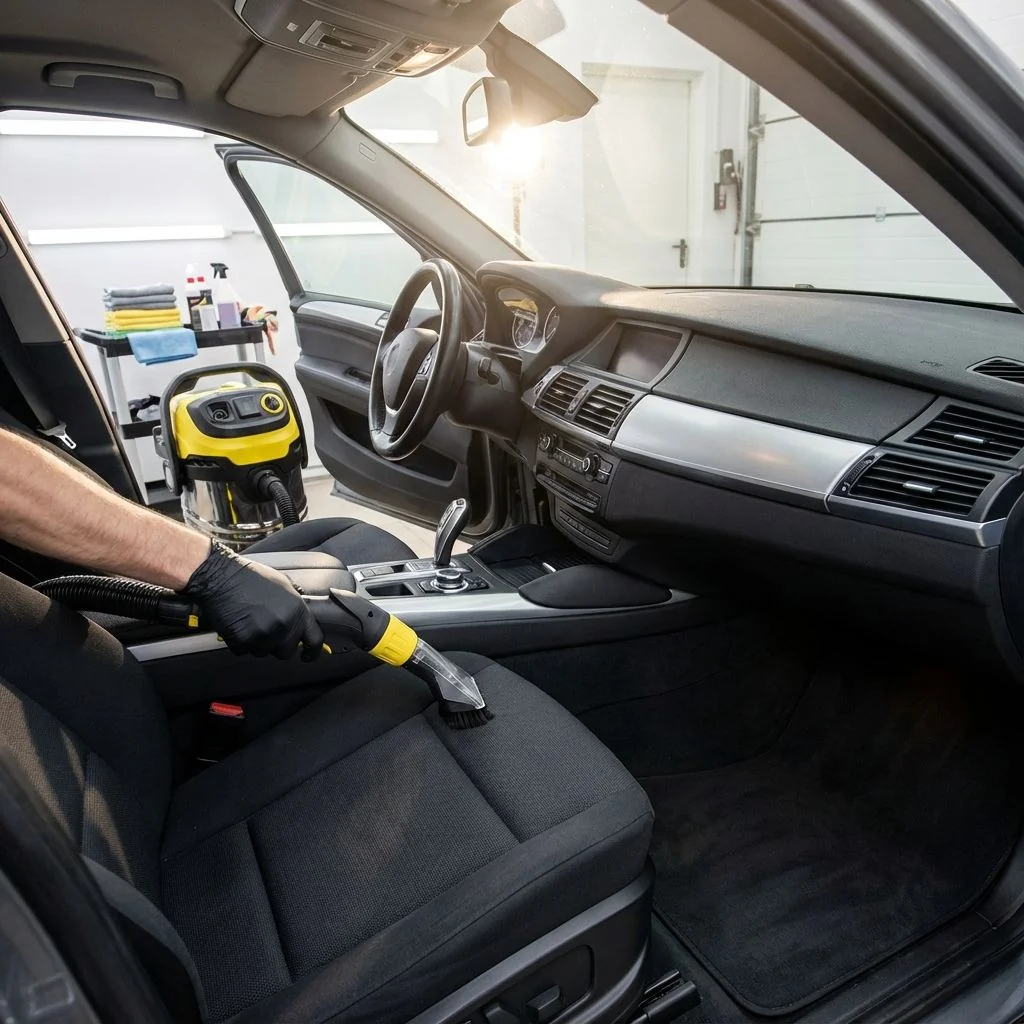
Not a regular vacuum:
- True HEPA filtration (99.97% of particles 0.3 microns+)
- High-suction commercial unit
- All fabric surfaces vacuumed
- Seat crevices, carpet, headliner
- Ventilation outlets
Why HEPA matters: Regular vacuums exhaust allergens back into the air. HEPA traps them.
Step 2: Fabric Steam Treatment
Hot steam kills dust mites:
- 200°F+ steam application
- Penetrates fabric deeply
- Destroys mites and eggs
- No chemicals needed
Additional benefit: Steam also kills mold spores and bacteria.
Step 3: AC/Ventilation Treatment
Evaporator coil cleaning:
- Foam cleaner through system
- Kills mold in evaporator housing
- Fresh filter installation
- Duct treatment optional
Step 4: Surface Sanitization
All hard surfaces:
- Dash, console, door panels
- Steering wheel, controls
- Antimicrobial treatment
- Removes embedded pollen/dander
Step 5: Ozone Treatment (Optional)
For severe cases:
- Ozone generator runs 30-60 minutes
- Oxidizes allergens at molecular level
- Kills mold and bacteria
- Vehicle must be unoccupied
Note: Some individuals are sensitive to residual ozone. Air out vehicle thoroughly after treatment.
DIY Allergen Reduction
Weekly Maintenance
Take 10 minutes weekly:
- Remove and shake out floor mats
- HEPA vacuum seats and carpet
- Wipe hard surfaces with damp microfiber
- Clean steering wheel (high-touch surface)
- Dispose of any trash
Monthly Deep Clean
30-minute monthly routine:
- Full HEPA vacuum including trunk
- Wipe all surfaces with allergen-reducing spray
- Clean door jambs and sills
- Vacuum vents with brush attachment
- Check under seats for debris
Seasonal Actions
Every 3-4 months:
- Replace cabin air filter
- Professional vent treatment
- Check for moisture/mold under mats
- Deep fabric treatment if needed
Choosing the Right Cabin Air Filter
Standard Paper Filter
- Traps large particles
- Cheap replacement ($10-20)
- Limited allergen protection
- Change every 15,000 miles
HEPA-Style Filter
- Better particle capture
- Moderate cost ($25-40)
- Good for most allergy sufferers
- Change every 15,000 miles
Activated Carbon + HEPA
- Best overall protection
- Absorbs odors and gases
- Premium price ($40-75)
- Excellent for severe allergies
- Change every 12,000 miles
Product Recommendations
For DIY Cleaning
| Purpose | Product Type |
|---------|--------------|
| Vacuuming | HEPA car vacuum or home HEPA with crevice tool |
| Surface cleaning | Allergen-reducing multipurpose spray |
| Fabric treatment | Enzyme-based fabric cleaner |
| Air freshener | Avoid—use purifiers instead |
What to Avoid
- Fragranced products (trigger many allergies)
- Spray air fresheners
- Ozone generators (DIY use risky)
- Steam cleaners without proper suction
Preventing Future Allergen Buildup
Driving Habits
- Use recirculate mode during high pollen days
- Keep windows up in traffic
- Run AC 5 minutes before parking (reduces moisture)
- Remove gym bags, dirty clothes promptly
Passenger Policies
- Brush off visible pollen before entering
- Remove shoes if visibly dirty
- Clean up spills immediately
- Limit pet passengers or use covers
Parking Considerations
- Park in covered areas when possible
- Avoid under trees (pollen, bird debris, sap)
- Keep windows closed when parked
- Use sunshade to reduce interior heat (slows mold growth)
Recommended Detailing Schedule for Allergy Sufferers
| Frequency | Service | Purpose |
|-----------|---------|---------|
| Weekly | Quick vacuum + wipe | Surface allergen removal |
| Monthly | Full interior detail | Deep cleaning |
| Quarterly | Steam extraction | Kill dust mites, mold |
| Semi-annually | Professional allergen treatment | Total cabin sanitization |
Schedule Your Allergen Detail
We offer specialized allergen removal services:
- HEPA deep extraction
- Steam sanitization
- AC/vent treatment
- Cabin filter replacement
- Ozone treatment (severe cases)
Learn more: Professional Detailing Services — interior care packages.
📞 Book allergen removal detail
📍 Visit our Gilroy shop — breathe easier in your vehicle.
Frequently Asked Questions
How much does allergen removal detailing cost?
Basic interior detail with HEPA vacuum runs $100-$150. Full allergen treatment including steam extraction, AC treatment, and sanitization costs $200-$350. Ozone treatment for severe cases adds $50-$100.
How often should allergy sufferers detail their car?
Weekly light vacuuming, monthly full vacuum and wipe-down, and quarterly professional steam extraction. Severe allergy sufferers may benefit from monthly professional treatments during high-pollen seasons.
Does cabin air filter type matter for allergies?
Yes. Standard paper filters catch large particles only. HEPA-style filters capture more allergens. Activated carbon + HEPA filters provide the best protection, especially for chemical sensitivities. Replace every 12,000-15,000 miles.
Can car detailing cure my car allergies?
Detailing significantly reduces allergen levels but isn't a permanent cure. Allergens continuously enter through ventilation and on passengers. Regular maintenance keeps levels manageable for most allergy sufferers.
Is ozone treatment safe for allergy sufferers?
Ozone effectively kills mold and destroys allergens but can irritate some people. Air out your vehicle thoroughly (windows down, AC on) for 30+ minutes before driving after treatment. Most find the benefits outweigh temporary residual sensitivity.
What's the best vacuum for car allergies at home?
Use a vacuum with true HEPA filtration (99.97% of particles 0.3 microns and larger). Regular shop vacuums exhaust allergens back into the air. Cordless car vacuums rarely have true HEPA capability.
Should I use air fresheners if I have allergies?
Avoid fragranced products—they're common allergy triggers. Instead, use small HEPA air purifiers, activated charcoal bags, or baking soda for odor absorption. Address odor sources rather than masking them.
How do I reduce pet dander in my car?
Use seat covers that can be machine washed. Vacuum after every pet ride with HEPA vacuum. Clean hard surfaces weekly. Consider professional allergen treatment quarterly if you regularly transport pets.
Visit the Experts in Gilroy
Blackout Window Tinting is the Bay Area's premier choice for premium auto protection. Based in Gilroy at 610 Holloway Rd (behind Target), we've served the South County and Silicon Valley area for over 33 years. Whether you're coming from Morgan Hill, Hollister, or anywhere else in the Bay Area, we're your trusted local source for professional window tint, PPF, and ceramic coating.
📞 Questions? Call us at 408-848-8468 or get a free quote online.