You've been driving your car for years. The headlights work fine—you flip them on at dusk, flip them off at dawn. No problems.
Then one night you realize: you can barely see the road.
Headlight degradation doesn't happen overnight. It's gradual—so slow you don't notice until visibility is already dangerously compromised.
Here are the 5 warning signs that your headlights need professional restoration.
Sign #1: The "Yellow Tint" Test
How to check: Park next to a newer vehicle of the same color. Compare headlight lenses.
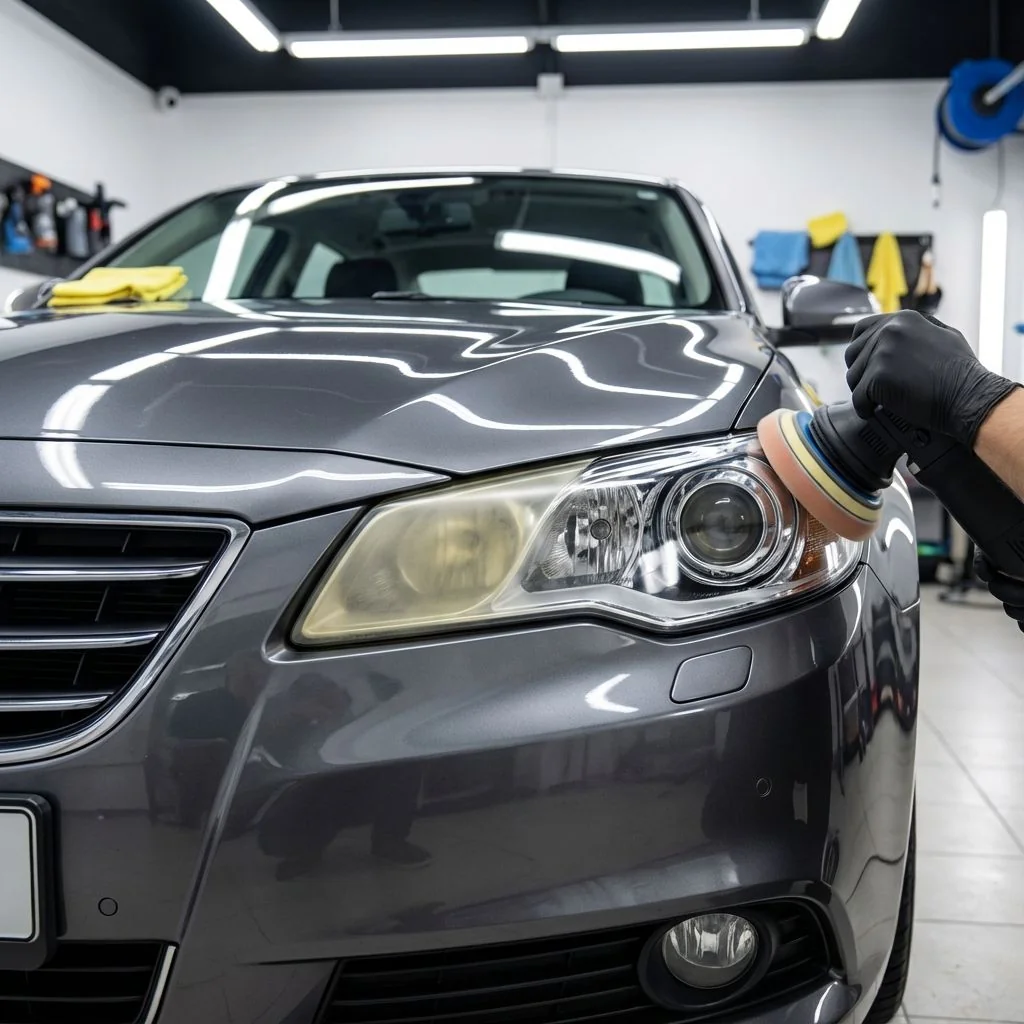
Fresh headlights are crystal clear—almost invisible. If yours have a yellow, amber, or brownish tint compared to newer vehicles, oxidation has begun.
What's happening: UV radiation from California sun breaks down the polycarbonate plastic. The surface molecules degrade and discolor.
Severity levels:
- Light yellow tint: Early-stage oxidation. Ideal time to restore + protect
- Medium yellow: Moderate oxidation. Light output already reduced 20-40%
- Orange/brown: Severe oxidation. May require aggressive restoration
The catch: Because degradation is gradual, your eyes adjust. You don't notice the yellowing—until you see a comparison.
Sign #2: The "Haze at Angle" Test
How to check: Walk 10 feet from your car. Look at the headlights from a 45-degree angle in daylight.
Healthy headlight lenses are smooth and reflective—almost mirror-like. Damaged lenses show a cloudy, milky haze that's especially visible when viewed off-angle.
What's happening: Microscopic pitting and surface roughness scatter light instead of transmitting it cleanly. This haze:
- Reduces light output reaching the road
- Creates glare for oncoming drivers
- Gets worse over time
Severity indicator: If you can see haziness from 10+ feet away in daylight, you've lost meaningful light output.
Sign #3: The "Garage Wall" Test
How to check: Park 10 feet from a wall (garage door works great). Turn on headlights at night. Compare brightness and focus to when the car was newer.
This is the most practical test because it measures what matters: actual light output.
What to look for:
- Brightness: Is the illuminated area dimmer than you remember?
- Focus: Are the beam edges soft and undefined?
- Hot spots: Do you see uneven brightness distribution?
- Color: Does the light look yellowish rather than white?
Reality check: Oxidized headlights can lose 50-80% of light output. That's the difference between seeing a pedestrian at 200 feet vs. 50 feet.
Sign #4: Other Drivers Flash Their Brights
The sign: Oncoming drivers flash their high beams at you—even when your headlights are on low beam.
What's happening: Oxidized headlight lenses scatter light in all directions instead of focusing it forward. This scattering:
- Reduces your forward visibility
- Creates glare for other drivers
- Makes your headlights look brighter (to them) while producing less useful light (for you)
The danger: This is a safety issue for everyone. Glare from scattered light temporarily blinds oncoming drivers while you're straining to see the road.
If this happens regularly, your headlights are overdue for restoration.
Sign #5: Night Driving Fatigue
The sign: You strain to see at night. You find yourself leaning forward. Night driving feels more exhausting than it used to.
This is the sneakiest sign because you probably blame other factors:
- "I'm just getting older"
- "These roads don't have enough streetlights"
- "My prescription needs updating"
The reality: Human eyes adapt remarkably well to low light—but it takes effort. When headlights degrade gradually, your brain compensates by working harder.
Test it: Drive a rental car or a friend's newer vehicle at night. If their headlights seem dramatically better, the issue is your headlights—not your eyes.
The Compound Problem: Why Waiting Makes It Worse
Headlight oxidation doesn't plateau. It accelerates.
Year 1-3 of oxidation:
- Surface degradation only
- Easy restoration with standard process
- Protection lasts longest on less-damaged plastic
Year 4-6 of oxidation:
- Deeper pitting into the plastic
- Restoration requires more aggressive sanding
- Plastic structure is weakening
Year 7+ of oxidation:
- Deep crazing and cracking
- Some lenses become too damaged for restoration
- Replacement becomes the only option at $400-2,000+ per pair
The lesson: Early restoration + protection saves money and maintains safety longer than waiting.
The Quick Self-Assessment
Run through this checklist:
| Test | Pass | Concern | Needs Restoration |
| -------------- | --------------- | ------------ | ----------------- |
| Yellow tint | Crystal clear | Light yellow | Yellow/orange |
| Haze test | Mirror-like | Slight haze | Cloudy from 10ft |
| Wall test | Bright, focused | Slightly dim | Dim, unfocused |
| Driver flashes | Never | Occasionally | Regularly |
| Night fatigue | Normal | Noticeable | Exhausting |
Scoring:
- All "Pass" = Headlights healthy. Consider PPF protection to keep them that way
- Any "Concern" = Early oxidation. Ideal time to restore before it worsens
- Any "Needs Restoration" = Book professional restoration now
What Professional Restoration Includes
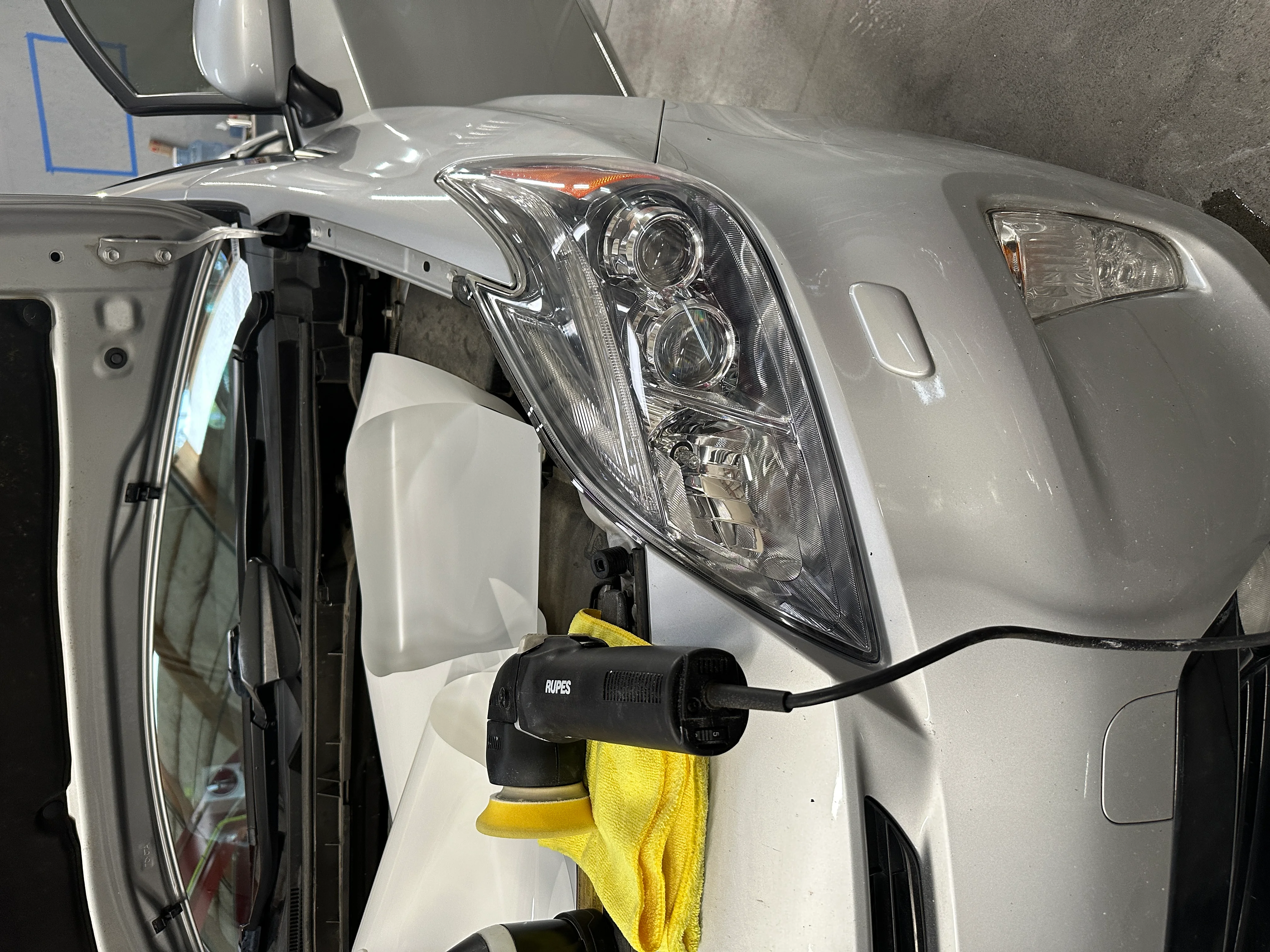
At Blackout Window Tinting, our headlight restoration process:
Wet Sanding Progression
- 800-grit to remove heavy oxidation
- 1500-grit to refine surface
- 2000-3000 grit for polishing prep
Machine Polishing
- Compound polish restores optical clarity
- Final polish for crystal-clear finish
UV Protection
- Critical step most DIY kits skip
- Professional-grade UV sealant or ceramic coating
- Prevents re-oxidation for 2-3 years
Time: 1-2 hours for most vehicles.
Cost: $150-250 depending on protection level.
Result: Near-factory clarity with protection against future damage.
Protect Your Headlights Before Warning Signs Appear
If you're reading this article, you probably already suspect your headlights need attention.
Trust your instincts.
📞 Schedule headlight restoration — same-day appointments often available. Learn more about our headlight restoration services →
📍 Visit our Gilroy shop — we'll show you our restoration results in person.
Frequently Asked Questions
How long does professional headlight restoration take?
Most vehicles take 1-2 hours for complete restoration. The process includes wet sanding through multiple grits, machine polishing, and UV protection application.
How much does headlight restoration cost?
Professional headlight restoration costs $150-250 per pair depending on the protection level included. This is significantly less than OEM replacement ($400-2,000+ per pair).
Can severely oxidized headlights be restored?
Most yellowed and hazed headlights can be restored to 90-95% clarity. However, headlights with deep crazing, cracking, or internal fogging may need replacement.
Will DIY headlight restoration kits work?
DIY kits provide temporary improvement but typically fail within 3-6 months because they lack professional-grade UV protection. Professional restoration with proper sealant lasts 2-3 years.
How do I prevent headlights from fogging again?
Apply PPF (paint protection film) after restoration for 5-10 year protection. Without protection, expect re-oxidation within 12-18 months in California's climate.
Can headlight restoration fix internal fogging?
No. Internal moisture or fogging requires headlight replacement, not restoration. External restoration only addresses surface oxidation and yellowing.
Is headlight restoration covered by insurance?
Typically no—headlight restoration is considered cosmetic maintenance. However, if headlights affect a safety inspection, some policies may cover replacement.
How often should I restore my headlights?
With professional UV protection, every 2-3 years. Without protection, oxidation returns within 12-18 months. Adding PPF after restoration can extend clarity to 5-10 years.
Visit the Experts in Gilroy
Blackout Window Tinting is the Bay Area's premier choice for premium auto protection. Based in Gilroy at 610 Holloway Rd (behind Target), we've served the South County and Silicon Valley area for over 33 years. Whether you're coming from Morgan Hill, Hollister, or anywhere else in the Bay Area, we're your trusted local source for professional window tint, PPF, and ceramic coating.
📞 Questions? Call us at 408-848-8468 or get a free quote online.